
The rise of Liquid Expectations
In today’s world, consumers no longer compare experiences within the same industry. Instead, they measure every interaction against the best experiences they’ve encountered across industries. This phenomenon, known as liquid expectations, creates unique challenges for designers and businesses alike.
Example: A customer who enjoys Uber’s seamless checkout process may expect the same level of convenience from their bank, even though the two industries are unrelated.
As expectations rise, companies must innovate to meet these new standards—or risk losing customers to competitors who deliver better experiences.
- 74% of consumers: Say experience impacts their willingness to be loyal.
- 59% of consumers: Switch brands due to poor experiences.
- 40% of consumers: Are willing to pay more for better experiences.
Uber Checkout and Apple vs. Banks
Liquid expectations emerge when consumers compare experiences across industries. Two key examples highlight this phenomenon:
- Uber Checkout: Closing the car door is all it takes to complete a transaction. This sets a new benchmark for how effortless checkout processes can be.
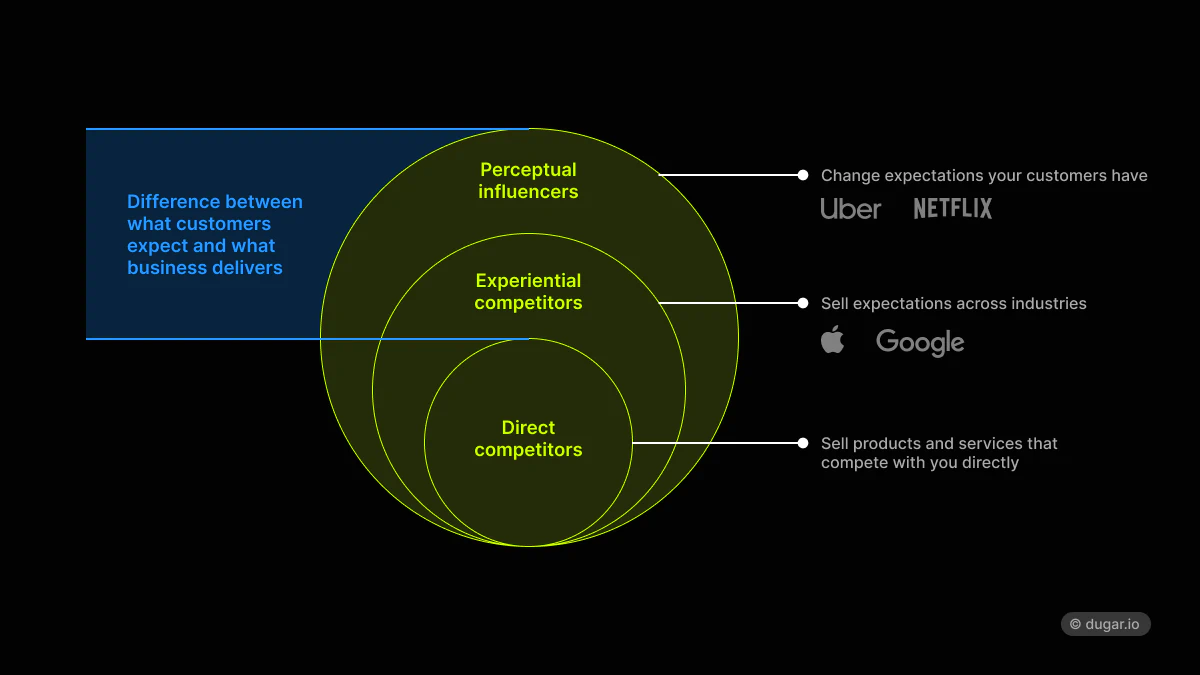
- Apple vs. Banks: Consumers no longer compare two banks—they compare their bank’s experience to Apple’s user-centric design.
These comparisons reset what “good” looks like, forcing companies to rethink how they approach user experiences in every industry.
Loyalty and the experience gap
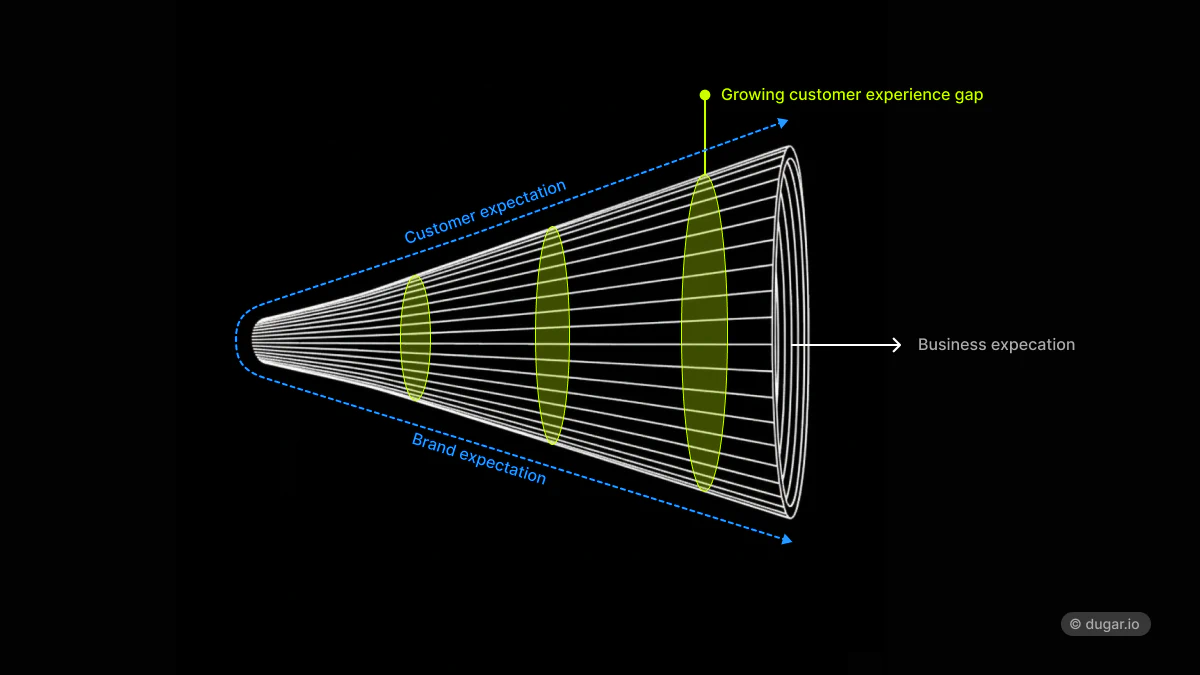
Liquid expectations pose a significant threat to businesses that fail to deliver experiences matching consumers evolving standards. This creates a loyalty gap, where customers are less likely to remain loyal to a brand if their expectations aren’t met.
The experience gap:
The gap between what consumers expect and what businesses deliver is growing. However, this gap is also where innovation opportunities lie. Builders who embrace fast business prototyping can match these shifting expectations.
"Customers are loyal to experiences: Not brands."
Redesigning customer journeys
Competitive strategies must evolve beyond defeating direct competitors. Instead, they need to address liquid expectations and recognize that competitors now include companies from entirely different sectors that deliver superior experiences.
Example: The store bills customers automatically as they exit, mimicking Uber’s simplicity and eliminating checkout entirely.
Action plan
- Learn from disruptors: Study how leaders like Uber and Apple set new standards for immediacy, personalization, and convenience.
- Adopt continual design: Evolve design with its use and detect problems early through rapid prototyping.
- Focus on transparency: Build honest and straightforward experiences that genuinely benefit consumers.
- Personalize experiences: Create interactions that seamlessly fit into consumers daily lives.